

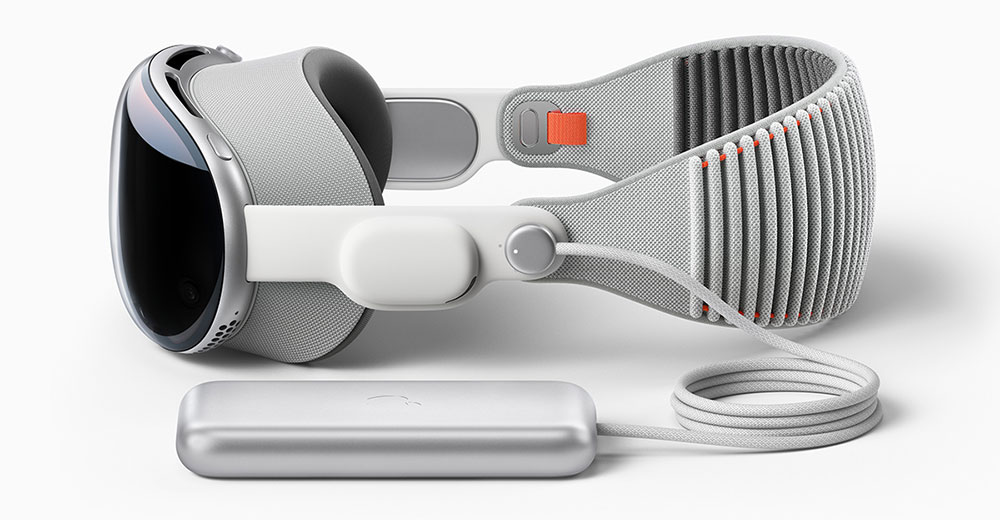
I’m skeptical that Apple’s Vision Pro, which was unveiled last week but won’t be available until 2024, will be a success.
My concerns relate mostly with Apple’s present strategy, which is to avoid collapsing existing markets, which Apple had to do to make the iPhone successful, and because the firm collaborates badly and will require a large number of dedicated partners to make this product succeed.
But one thing is certain: the introduction of this head-mounted display has only confirmed its existence. Someone, including Apple, has a large potential business opportunity with this incredibly disruptive and perhaps revolutionary method of interacting with technology.
Don’t get me wrong: the hardware is remarkable in almost every way. Apple’s current marketing strategy exposes it to the type of competitive threat that the iPod and iPhone did not face.
This week, let’s speak about the Apple Vision Pro. The TicWatch Pro 5, which gets as close to the Apple Watch as any wristwatch I’ve examined, will round out the list.
Apple Vision Pro is a well-designed device, but if a decent design was all that was required to generate a successful offering, then the French Citroen would be the most popular automobile in the world rather than a brand that is largely recognized in France.
The Vision Pro is the closest thing we’ve seen to a no-compromise head-mounted computing system.
Yes, it has new hardware and software, and it lacks a stable ecosystem, but neither the iPhone nor the iPod did at the outset, yet both were tremendously popular.
Other AR and VR products pale in contrast to Vision Pro’s excellent resolution and superb ergonomic design. While the $3,499 price tag is exorbitant, it is often preferable to initially offer a high-quality, exclusive product rather than do what Facebook and Microsoft did and introduce devices with tempting price points around $500 but sub-par quality.
Yes, it has new hardware and software, and it lacks a stable ecosystem, but neither the iPhone nor the iPod did at the outset, yet both were tremendously popular.
Other AR and VR products pale in contrast to Vision Pro’s excellent resolution and superb ergonomic design. While the $3,499 price tag is exorbitant, it is often preferable to initially offer a high-quality, exclusive product rather than do what Facebook and Microsoft did and introduce devices with tempting price points around $500 but sub-par quality.
If you initially set a high standard and then cost-cut it with a focus on the experience of a few, you may lay the groundwork for what could be an iPhone- or iPod-like market success. Tesla is one such example. Its automobiles were exclusive and first expensive, but with exceptional performance and utility, the cost was decreased and the firm became tremendously popular. Outside of Apple, Tesla is as near to the Apple model as you can get.While I like the Vision Pro in black, it does have some useful use and isn’t tied to the metaverse, which is a good thing because, while the Nvidia commercial metaverse has been successful, the Meta (Facebook) effort has failed.
I use head-mounted displays for entertainment; they come in handy when I’m having my teeth cleaned because staring at the office ceiling fan for 45 minutes gets old fast, and I’ve used them to watch movies on airplanes because I don’t like being embarrassed by some of the scenes in the R-rated action movies I like to watch when traveling.
The external battery pack reduces the weight of the Vision Pro gadget on your head and enables a simple upgrade to a larger battery pack (its two-hour charge is insufficient) or a plug-in alternative for aircraft flights.
In conclusion, there’s a lot to like about the Apple Vision Pro, but I doubt I’ll buy one due of Apple’s business practices.
While Steve Jobs certainly made it successful, the iPod had to work with Windows, and the iPhone had to cannibalize the iPod. Current Apple management appears to have forgotten those critical success elements.
The Apple Watch doesn’t work with Android, which limits its total available market (TAM); the iPad never cannibalized the Mac and languished against a more tablet-like Mac; and Apple’s strategy is revenue-, not customer-centric. As a result, you’ll have to buy the Vision Pro in addition to an iPhone and Mac, not as a replacement product that it might otherwise become.
FaceTime is integrated with Vision Pro, but I don’t expect Apple to put phone features into the product, and it’ll be very measured in how it approaches productivity products to protect the Mac. It’s likely to bury you with accessories like a better battery pack that should have been bundled with the product in the first place because a two-hour battery life is too short for a product designed for watching movies or gaming.
Apple also seems to have a view of partners that doesn’t include its partners being profitable. This approach is problematic when building an ecosystem for a new product because, as Meta discovered with its platform, you need many partners to create an ecosystem. However, if those partners believe you’ll take their profits, they won’t be eager to support your new platform.
Finally, Apple interoperates poorly, which means that critical apps from companies like Netflix, Amazon Prime, Microsoft, and anyone but Disney, which is already on board, are likely to either not show up timely or be poorly done and damage the user experience.
One more thing…marketing.
Apple was once a marketing powerhouse. To convince people to embrace a new computing platform, you need a lot of great demand generation marketing like Apple used for the iPod and iPhone. But it hasn’t had a campaign at that scale since Steve Jobs left, and it seems unlikely that will change for this product. Without that marketing heavy lifting, as good as this headset is, it will likely underperform.
Apple clearly has a path to success with the very well-designed Vision Pro head-mounted computer. However, to be successful, it’ll need to channel Steve Jobs, fund demand generation adequately, embrace cannibalizing existing products, partner better than it currently does, and interoperate far better with third-party content providers, not just Disney.
If Apple doesn’t do what is necessary with Vision Pro, it may validate a category that a competitor, like Samsung or Lenovo, will take from Apple, just as Apple took the smartphone market from Microsoft, Nokia, Palm, and Research in Motion (BlackBerry).
In summary, Steve Jobs’ Apple would have been a big success for the Vision Pro. The jury is still out on whether Tim Cook’s Apple can achieve the same since Cook is overly concerned with profitability and not sufficiently concerned with product success.