

This week’s Microsoft Ignite 2024 event in Chicago provided an opportunity to highlight Microsoft’s vision and strategy geared squarely at corporate and enterprise clients.
The speech focused on revolutionary technological transformations and the role of artificial intelligence (AI) in propelling these advances. This year’s theme focused on Microsoft’s commitment to empowering businesses with AI-powered solutions that streamline workflows and increase productivity.
CEO Satya Nadella began his lecture by reminiscing on previous technical milestones, linking the current emergence of AI to significant occasions such as the release of Windows 3.1 and the advent of cloud computing.
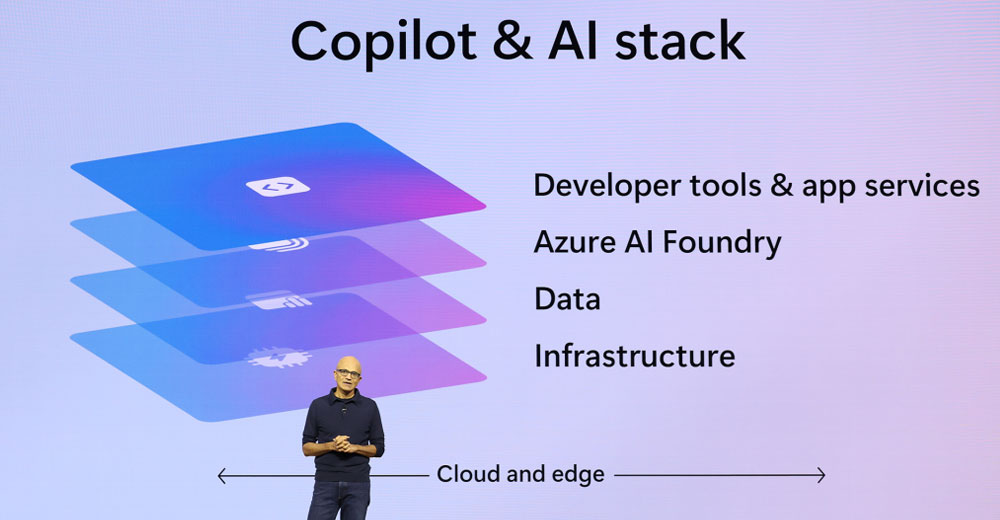
The focus, however, remained on the present: AI’s potential to transform enterprise processes. Microsoft is presenting itself as a leader in this space with three key AI offerings: Copilot, Copilot Devices, and the Copilot AI Stack.
Microsoft’s AI strategy is all around Copilot.
The Copilot ecosystem is the cornerstone of Microsoft’s enterprise strategy. It functions as an AI-powered user interface that is tightly integrated across the Microsoft 365 suite, automating processes, providing tailored insights, and improving collaboration.
Examples highlighted at the keynote demonstrated real-world applications, such as Vodafone utilizing Copilot to streamline contract management and Bank of Queensland using AI to shorten risk assessment deadlines. Organizations can use Copilot Studio to create tailored AI agents and automate repetitive operations, increasing efficiency.
Microsoft prioritizes security.
Security was another major focus, with Microsoft promoting its “Secure Future Initiative,” which promotes a zero-trust approach to security and ongoing improvement in data governance.
Updates to Purview, Microsoft’s data governance platform, aim to address AI-related concerns such as data protection and criminal intent detection. The talk also included an important announcement: the Zero Day Quest hacking competition, which aims to identify flaws in AI systems and demonstrates Microsoft’s commitment to securing AI and cloud technologies.
AI-enabled devices take center stage.
The presentation also highlighted Microsoft’s breakthroughs in AI-optimized devices. Introducing Copilot+ PCs is a step toward integrating cloud and AI capabilities at the edge, resulting in a unified distributed computing environment.
These devices, created in partnership with OEMs like as AMD, Intel, and Qualcomm, improve AI performance and energy efficiency. This collaboration demonstrates both the opportunities and problems that Microsoft faces in its quest of a consistent user experience.
The Ignite keynote stressed Microsoft’s goal of improving workplace productivity with AI-driven solutions at all layers of the stack, including infrastructure, applications, and user interfaces. Copilot integration goes beyond chat and document drafting to include advanced tools like AI-powered data analysis in Excel, automated meeting summaries in Teams, and dynamic presentation creation in PowerPoint.
The complete integration of AI across Microsoft 365 demonstrates the company’s ambition to drive transformation in all aspects of work.
Using Copilot Analytics in proving ROI
Measurement and ROI were also cited as important considerations for AI implementation. Copilot Analytics offers tools to help businesses link Copilot usage to specific business indicators, such as greater revenue or improved operational efficiency.
By delivering actual results, Microsoft hopes to highlight the value of its AI products and assist enterprises in justifying their AI technology investments.
Addressing OEM Partnerships and Messaging Challenges.
Despite these advancements, the speech addressed the challenges that lie ahead. One major takeaway is Microsoft’s reliance on a complicated ecosystem of OEM partners.
Unlike Apple, which uses a single voice to communicate the benefits of new technologies, Microsoft must rely on multiple OEMs to supply and sell its innovations. This challenging reliance can result in fragmented messaging, making it difficult for end users to completely comprehend the value and potential of Microsoft’s AI products.
Collaboration with OEMs provides flexibility and various options, but it also brings inconsistencies that might impede customer adoption and awareness.