

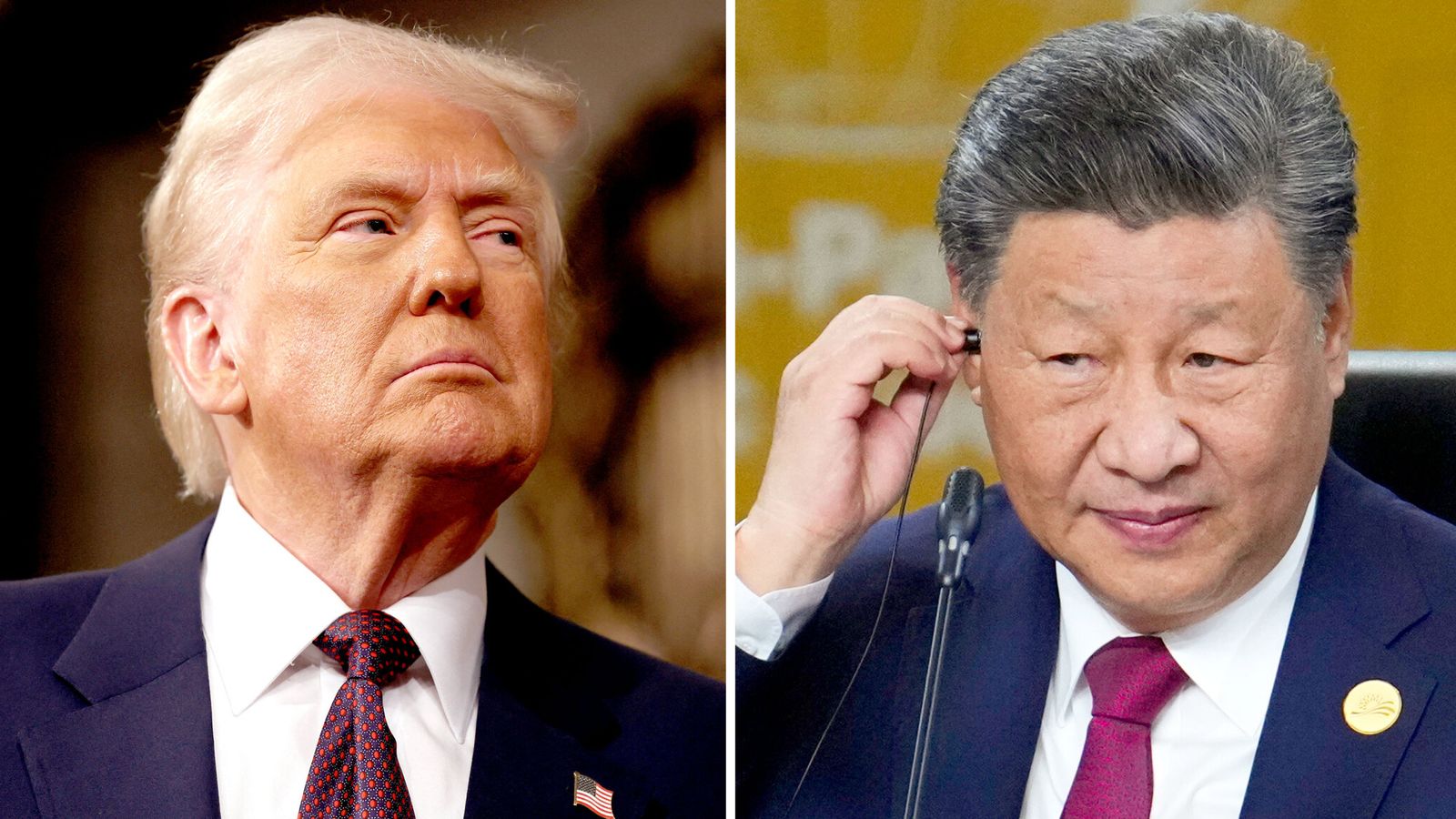
If the US does impose the additional 50% tomorrow, what could or would China do next? What does it mean when it says it will “fight to the end”?
The gravity of the situation cannot be understated; imposing an additional 50% tariff on all Chinese exports would devastate trade between the world’s two largest economies.
Remember, 50% would be added to what is currently on the table: 34% declared last week, 20% announced at the start of US President Donald Trump’s term, and some leftover tariffs from his first term.
Overall, all Chinese goods would incur tariffs of more than 100%, with some reaching 120%.
It’s a fee that makes any transaction nearly impossible. China is currently the only nation in the world that has chosen to take a stand. While others are publicly making concessions and sending delegations to talk, China has clearly determined that not being seen as intimidated is worth the cost of reprisal.
The real question, though, is if the US does indeed impose this extra 50% tomorrow, what could or would China do next?
It has said it will “fight to the end”, but what does that mean? In reality, there are few good options. There are some obvious measures that China will almost certainly enact.
Further export controls on rare earth minerals (crucial for the development of high-tech products) are one example. China controls a huge proportion of the world’s supply, but the US would likely find workarounds in time.
Hiking tariffs on high-impact US products such as agricultural goods is another option, but there is only so far this could go. The potentially more impactful options have significant drawbacks for Beijing.
It might, for example, target high-profile American companies like Apple and Tesla, but this is not ideal at a time when China is attempting to attract more international investment, and while currency depreciation is possible, it would also have negative consequences.
Other solutions are more political and carry the risk of escalation beyond the economic realm.
In an opinion piece published this morning, the editor of Xinhua, China’s state news agency, speculated that China may discontinue all collaboration with the US in the fight against fentanyl.
This has been a significant political issue for Mr. Trump, and it’s hard to imagine it wouldn’t be a red line for him.
Other suggestions include prohibiting the import of American films or calling on the Chinese population to boycott all American products.
Anything like this suggests that the world’s two most powerful countries may be on the verge of not only complete economic decoupling but also cultural estrangement.
There is understandable concern about how this could escalate and the precedent it creates.